How to Explain “Who’s Invited” on Your Wedding Website (Without Hurt Feelings)
“Who’s invited?” sounds simple—until it isn’t. Adults-only receptions, limited plus-ones, family-only ceremonies, wedding-party events… These choices are normal. The hard part is communicating them clearly without awkwardness or hurt feelings.
This guide shows you how to explain “who’s invited” on your wedding website with kind, confident wording. You’ll learn where to place the info, what to avoid, and copy-paste examples for the most common situations.
Why This Topic Gets Sensitive (Fast)
Guests don’t usually feel upset about rules. They feel upset about uncertainty. When invitations and your website don’t clearly match—or details feel implied—people start guessing, asking, or assuming exceptions.
- Clarity prevents awkward conversations: Guests understand expectations upfront.
- Consistency builds trust: Your website matches your invitations and RSVP options.
- Kind wording keeps the tone warm: You’re setting boundaries, not judging anyone.
The Guest-First Rule: Say What’s True, Then Say What to Do
The best “who’s invited” wording uses a simple structure:
- State the plan: Adults-only / named guests only / ceremony is family-only.
- Give a brief reason (optional): space, venue capacity, or intimacy.
- Give a next step: RSVP for named guests only, reach out if you’re unsure.
Short, direct, and warm is almost always better than over-explaining.
Where to Put “Who’s Invited” on Your Wedding Website
Don’t bury it. Guests look in the same places every time:
- RSVP page: Reinforce “named guests only” and plus-one rules.
- FAQ page: A dedicated “Who’s invited?” question is ideal.
- Weekend schedule: Clarify “who’s invited” for each event (welcome drinks, brunch, etc.).
If you don’t have an FAQ yet, start here: What to Write on Your Wedding Website FAQs (With Copy-Paste Examples).
What to Avoid (So It Doesn’t Sound Harsh)
- “No exceptions.” It can read defensive—even if you mean well.
- Long justifications. One short reason is enough (or none at all).
- Shaming language. Avoid anything that implies guests are a problem.
- Vague hints. “Small ceremony” or “intimate” isn’t a clear policy.
Copy-Paste Wording: Named Guests Only
Option A (simple and clear)
We’re keeping our celebration small, so we’re only able to invite the guests listed on your invitation. Thank you for understanding—and we can’t wait to celebrate with you.
Option B (helpful next step)
Due to limited capacity, we can only accommodate invited guests. Please RSVP for the names listed on your invitation. If you have questions about your household, feel free to reach out.
Copy-Paste Wording: Plus-Ones
Option A (straightforward)
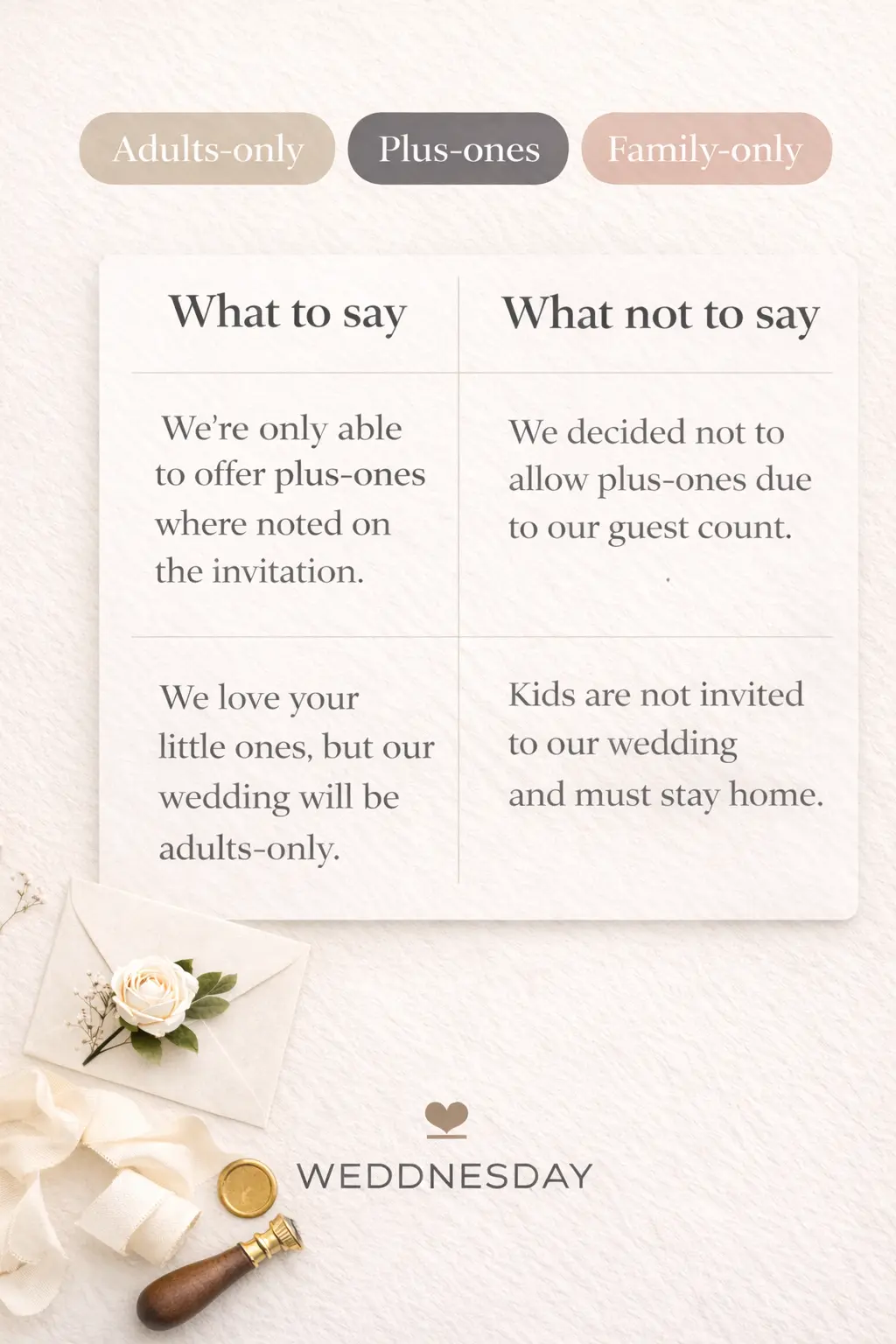
Plus-ones are included only where specified on the invitation. If you have a plus-one, you’ll see space to add their name when you RSVP.
Option B (kind and confident)
Because our venue is limited, we’re only able to offer plus-ones to guests where noted on the invitation. Thank you for helping us keep the day comfortable for everyone.
Copy-Paste Wording: Adults-Only Wedding
Option A (classic)
We love your little ones, but our wedding will be an adults-only celebration. We hope this gives you the chance to relax and enjoy the evening with us.
Option B (capacity-based)
To keep our guest count within venue limits, we’re unable to accommodate children at the wedding. We truly appreciate your understanding and can’t wait to celebrate together.
Tip: If you have a dress code, link it nearby so guests feel fully prepared: Wedding Website Dress Code Wording.
Copy-Paste Wording: Children Invited (But Not Everywhere)
Option A
Children are welcome at the ceremony and reception. For the evening events, we’re keeping things adults-only. Thank you for understanding.
Option B (event-by-event)
Kids are welcome at our daytime events. For the late-night celebration, we’re planning an adults-only atmosphere.
Copy-Paste Wording: Ceremony Is Family-Only
Option A
Our ceremony will be intimate and reserved for immediate family. We can’t wait to celebrate with everyone at the reception afterward.
Option B (warm and clear)
We’re keeping the ceremony small, with family only, and opening the celebration to all invited guests at the reception. Thank you for being part of our day.
Copy-Paste Wording: Multiple Events, Different Guest Lists
For multi-day weekends, spell out “who’s invited” on each event card. Guests love clarity. You can also add a short note in your FAQ:
Option A
Some events are reserved for family and the wedding party. Your invitation (and RSVP) will show which events you’re invited to. We’ll also list it clearly on the schedule.
Option B
Our weekend includes a few smaller gatherings with different guest lists. Please check the schedule and RSVP page for the events included with your invitation.
If you’re building a weekend schedule, this timeline guide helps you structure updates without stress: Wedding Website Timeline.
RSVP Page Wording That Prevents Confusion
Your RSVP flow should reinforce your policy quietly and consistently:
- Show only the invited names when possible.
- Use “Add your guest’s name” only when a plus-one is invited.
- Add one gentle line of guidance below the RSVP form.
Copy-paste RSVP note:
Please RSVP only for the guests listed on your invitation. If you believe something is missing, reach out and we’ll help.
FAQ Template: “Who’s Invited?”
Question: Who’s invited?
Answer: We’re able to accommodate the guests listed on your invitation. If a plus-one is included, you’ll see space to add their name when you RSVP. If you have a question about your invitation, please reach out.
If You’re Worried About Hurt Feelings, Use This Tone
The goal isn’t to persuade. It’s to be kind and consistent. A few small phrasing shifts help:
- Use “we’re only able to” instead of “we decided to.”
- Use “thank you for understanding” instead of “no exceptions.”
- Keep it short—clarity reads as confident, not cold.
Make It Even Easier with Weddnesday
Weddnesday helps you communicate guest lists, plus-ones, and multi-event weekends in a clean, guest-first way—so your website reduces questions instead of creating them.
Next, make sure guests can actually find the info when they need it: How to Share Wedding Info with Guests (Without the Stress) and How to Share Your Wedding Website with Guests (The Right Way).
FAQ
Should I explain the reason (capacity, budget, venue rules)?
You can, but keep it short. One sentence is plenty—or skip it entirely. Clarity matters more than justification.
What if someone asks for an exception?
Keep your reply consistent with your website wording. Thank them for understanding and repeat the policy kindly. Consistency is your best friend here.
Where should I mention adults-only?
Put it on the FAQ and near the RSVP page. If you’re planning multiple events, repeat it on the schedule where relevant.
Stay Connected
Follow Weddnesday for weekly planning tips, wording templates, and guest-first wedding guidance:
Pinterest | Instagram | Facebook | LinkedIn
Save This on Pinterest